About WMA
A New Infrastructure for African Textiles
Our Story
Woven Market Africa did not begin with a grand plan to build an institution or transform an industry.
It began with a search in Nigeria.
In the early days, we were simply looking for traditional African textiles for personal use — particularly Aṣọ̀-Òkè, one of Nigeria’s most iconic handwoven fabrics. We were drawn to the richness, depth of craftsmanship, the symbolism woven into its patterns, and the cultural identity it carried.
Aṣọ̀-Òkè fabrics were not hidden, They could be found in markets across Nigerian towns and cities, produced by skilled artisans and sold by traders who had been part of the trade for generations.
Yet something felt missing.
While the fabrics were present, they were not easily accessible to the average designer or creative buyer in a way that allowed them to truly work with them.
For many designers, the process of sourcing and developing ideas with heritage textiles felt distant and difficult. Communication gaps, limited production flexibility, and the absence of direct relationships with weaving communities made it challenging to explore the full creative possibilities of the fabrics.
Many simply did not try.
The turning point came when we realized that the gap was not about the textiles themselves — it was about connection – the distance between the worlds of craft and design
Designers needed a way to access these fabrics differently. They needed someone who could speak both languages: the language of traditional weaving and the language of contemporary creative development.
Woven Market Africa began by becoming that bridge.
We started working closely with designers who were curious about heritage textiles but needed guidance, access, and flexibility in developing their ideas. By connecting them more directly with artisan networks, we helped translate creative concepts into woven fabrics – something that was difficult to achieve through traditional market channels alone.
For many designers, this was the first time they could experiment freely with Aṣọ ̀-Òkè and other heritage fabrics, adapting patterns, colours, and textures to suit modern collections.
What began as simple sourcing gradually evolved into collaboration.
As these collaborations grew, another impact became clear. When artisans were connected to designers and consistent production opportunities, their work did more than preserve tradition — it created meaningful economic opportunity for their communities.
The deeper we worked within this space, the more we began to see a larger reality.
African textile traditions are rich with knowledge, skill, and cultural meaning. What they often lack are the systems that allow them to grow as sustainable industries in the modern world.
The connections between artisans, designers, markets, and institutions are often informal or fragmented. Without stronger structures, traditions that have survived for centuries risk becoming harder to sustain within today’s global economy.
This realization expanded our vision.
What began as a search for Aso oke in Nigeria gradually gradually evolved into a broader mission: to help rebuild the ecosystem around African textile craftsmanship — connecting artisans, designers, and global markets while preserving the knowledge and traditions embedded within the craft.
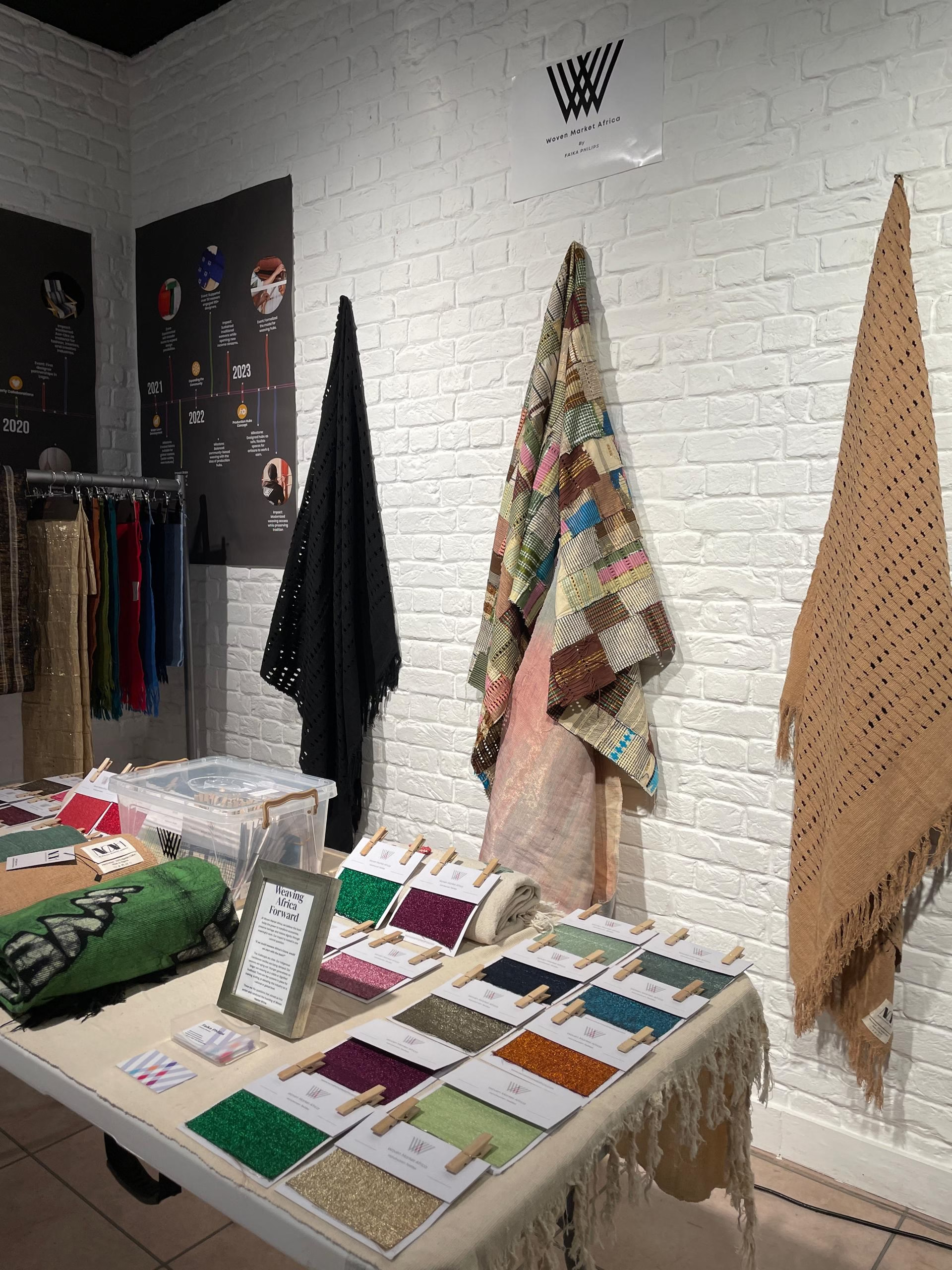
Today, Woven Market Africa operates at the intersection of culture, commerce, and community. We collaborate with artisan networks, work with designers and brands, and are building the institutional structures needed to ensure that African textile heritage can thrive as a living and evolving industry.
Our journey continues to grow, but the purpose remains clear:
to ensure that the knowledge, craftsmanship, and stories woven into African textiles are not only preserved, but able to flourish in the future.
Our Vision
We believe African textiles should not exist only as cultural artifacts, but as a thriving industry that supports artisans, communities, and global trade.
Our vision is to build an ecosystem where African textile production is structured, scalable, and globally recognized.
Our Mission
Our mission is to preserve, structure, and scale African textile heritage by connecting artisan communities to global markets through commerce, research, and institutional development.
Our Work
Woven Market Africa operates through three interconnected areas:

Textile Development
Designing and producing African textiles in collaboration with artisan communities.

Global Trade
Connecting African textile production to designers, brands, and institutions around the world.

Institution Building
Developing programs that preserve textile knowledge, train artisans, and support weaving communities.
What We Are Building
Rebuilding What Was
Never Meant to
Disappear.
Rebuilding What Was Never Meant to Disappear.
Woven Market Africa exists to restore, structure, and scale Africa’s textile heritage. For generations, weaving communities across the continent have preserved extraordinary knowledge — techniques, motifs, and traditions passed through the hands of artisans.